
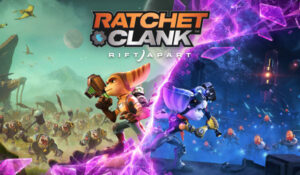
Ratchet & Clank: Rift Apart is one of the clearest showcases of what the PS5 can deliver, combining stunning visuals, fast loading, and highly polished gameplay with a strong sense of personality. From the opening moments, the game establishes itself as a true next‑gen experience, with 120Hz support, seamless transitions, and excellent use of the DualSense’s haptics and adaptive triggers.
The introduction works as a solid tutorial, though it presents many commands at once. For returning fans this is manageable, but new players may feel overwhelmed initially. Still, the clarity of the UI and the pacing make the learning curve smooth enough. The DualSense implementation is outstanding, with tactile feedback and controller audio that enhance immersion throughout the adventure.
The reward system is well‑designed: exploring, fighting, or simply deviating from the main path consistently grants useful items or upgrades. However, a few bugs appear occasionally, such as NPCs stuck on plants or colliding with each other, or respawn points placing the player too far from where they died. Some objects lack colliders, which might be intentional to prevent players from breaking the intended flow, but in those cases it would be better to block access more naturally.
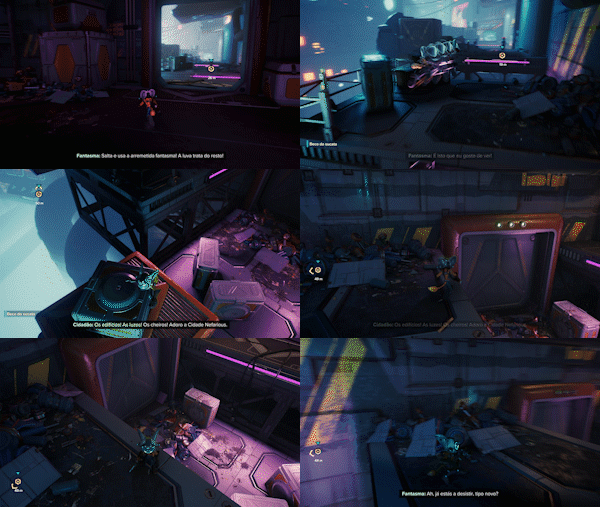
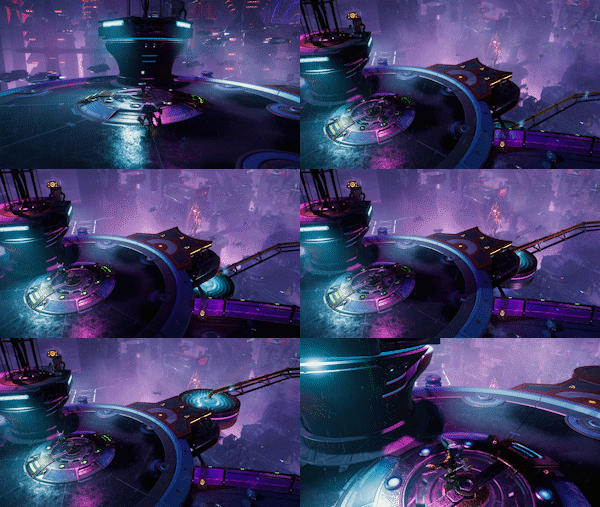
The game introduces mechanics gradually and intelligently. A good example is the jump explanation: the first failed jump doesn’t kill the player, but the second one does, creating a safe space to learn before applying the mechanic in real situations. On the other hand, some interactions feel overly simplified, such as rotating a wheel by holding the stick in one direction, when a circular motion could reinforce the connection between input and animation.
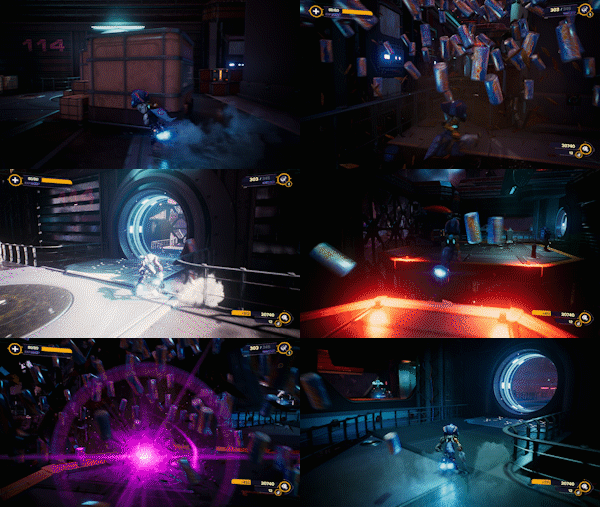 Level design is one of the game’s strongest aspects. Cities and maps are structured to unlock progressively, allowing players to revisit earlier areas naturally. This type of design, reusing spaces without feeling repetitive, appears throughout the game and is reinforced by details like hidden crates that become more visible when returning later. The arena at Zurkie’s is another highlight, offering varied and well‑crafted challenges that feel meaningful despite being optional.
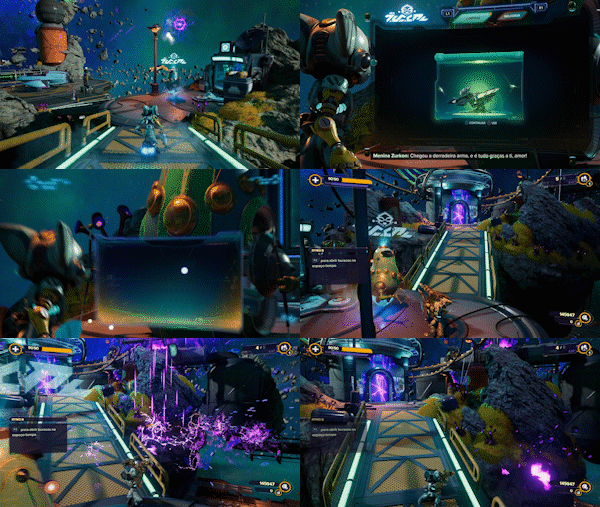
The game also features several mini‑games, such as the hacking sequences, which diversify gameplay and keep the pacing fresh. The weapon variety is excellent, encouraging players to experiment with different combat styles. Some weapons can overheat, like the Blackhole Storm, preventing constant spam and adding depth. Collecting all collectibles rewards the player with a free weapon, a satisfying incentive that can be used before the final mission.
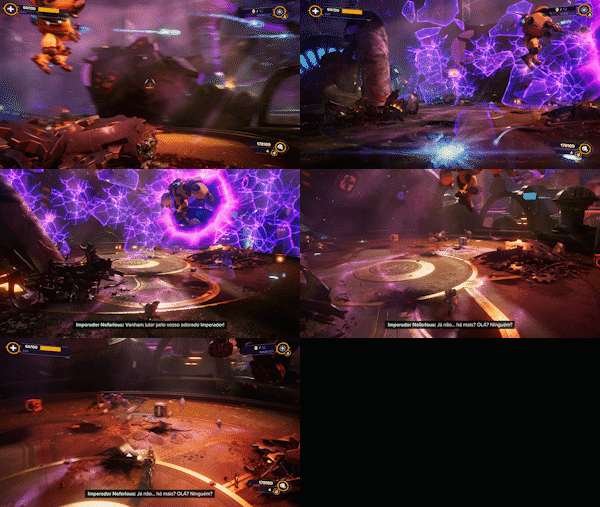
Narratively, the game is simple but effective, with emotional and well‑constructed moments. The relationship between Rivet and Kit grows through small details, such as the reveal about Rivet’s arm, which strengthens their bond and adds emotional weight. Humorous moments appear throughout the adventure, maintaining the lighthearted tone characteristic of the series. Kit’s return during a critical moment is predictable but works well, contributing to the character’s emotional arc.
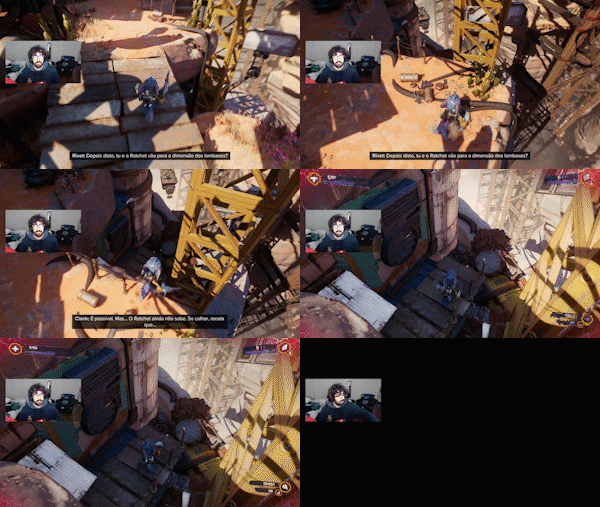 The game does suffer from occasional collision issues and invisible walls. In some cases, these barriers could be replaced with more natural visual blockers, such as taller buildings, ceilings, or environmental obstacles. In others, the player is killed for attempting jumps that seem possible, which feels inconsistent when similar drops are allowed elsewhere.
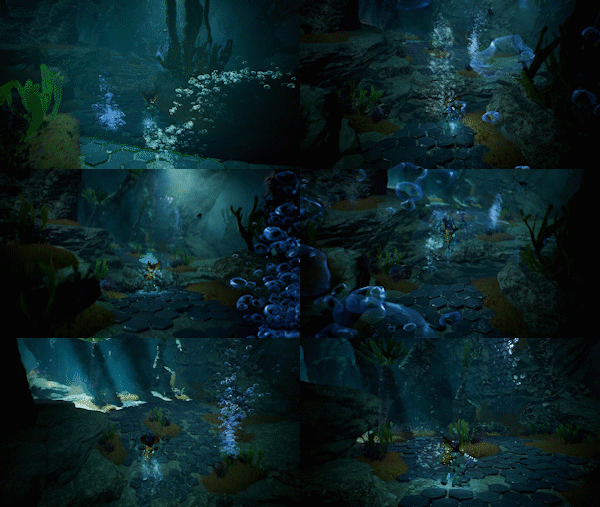 Underwater sections are well executed, but the magnetic jump can be confusing at first. The normal jump animation still plays even when it cannot be used, which may mislead players. Separating the normal jump from the magnetic jump more clearly would improve clarity.
There are also minor bugs, such as getting stuck inside a texture or the shield not activating until switching weapons. These issues are small but noticeable. On the positive side, the teleportation system, unlocked after completing the main missions of each region, is excellent for exploration, making collectible hunting far less tedious.
The game’s finale mixes all mechanics, weapons, and combat styles into a cohesive and satisfying climax. Ending the game in the same place where it began reinforces the narrative cycle and showcases strong map reuse. Puzzles evolve throughout the adventure, increasing in difficulty in a well‑balanced way, and some are particularly creative and entertaining.
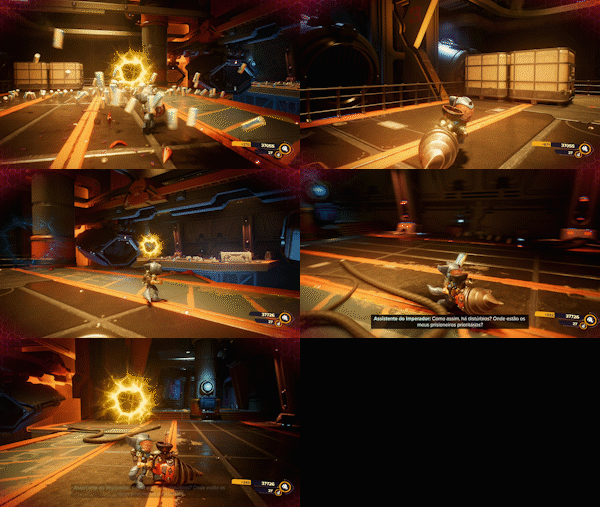
Small details elevate the experience even further, such as heartbeat sounds, controller pulses, and screen effects when health is low, or Clank unexpectedly swearing in a tense moment, adding humor and personality. These touches show the care put into making the game appealing to both younger and older players.
Overall, Ratchet & Clank: Rift Apart stands as a brilliant example of how next‑gen technology can enhance traditional gameplay. Despite a few bugs and collision inconsistencies, the experience is polished, varied, emotional, and consistently fun, a standout PS5 exclusive and an excellent case study for anyone interested in modern game and level design.
Played on: PS5 — Version: 1.005.003 — Hours played: 22h — Date of review: January 14, 2026