
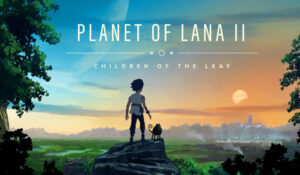
One fun detail before starting: the developers actually joined my livestream while I was playing, which made the experience even more special and added a personal touch to the whole playthrough.
Right from the start, the game shows a clear evolution from the first title. The atmosphere, animations and environmental storytelling remain strong, but the sequel introduces new mechanics, more aggressive character behavior, and a wider range of puzzles. Still, several visual clarity issues and small bugs appear throughout the experience.
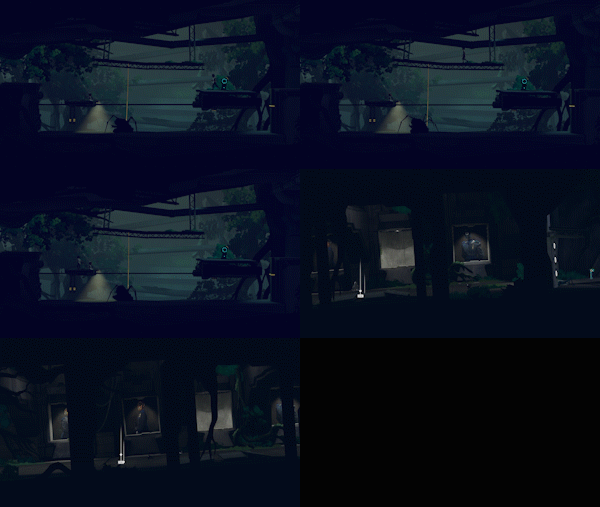
Some platforms blend too much with the background, making it difficult to understand that they are usable. Stronger colors or clearer silhouettes would improve readability. The game also introduces sections where we control Mui from a distance. While interesting, these moments could benefit from using Mui’s standard controls instead of a modified scheme, since Lana isn’t present and the player is essentially controlling Mui alone.
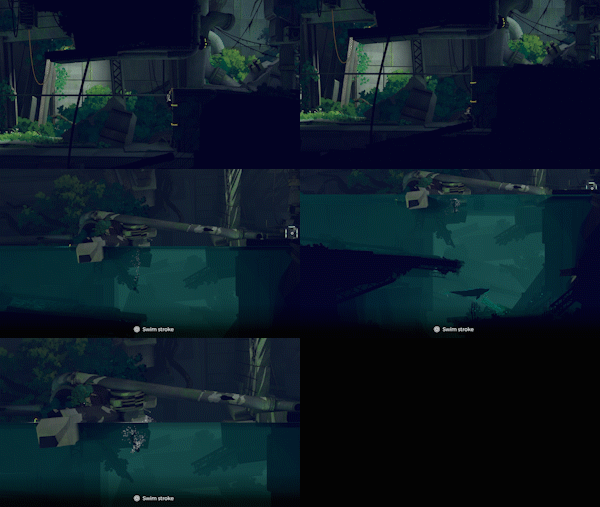
Movement clarity appears again in the drop mechanic. You can fall by looking down, which works, but most games use a dedicated “drop” button. It’s functional, but not the most intuitive approach. Camera behavior underwater also creates some issues — it would be helpful to keep Lana’s head above water when possible to better read enemy positions and plan movement.
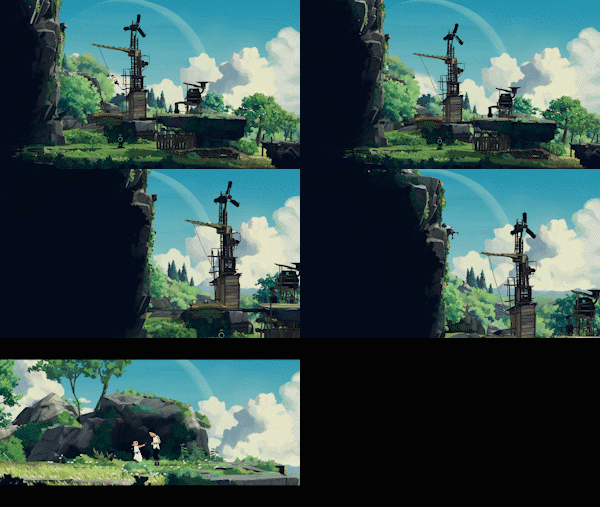
Climbing readability continues to be a recurring problem from the demo. The plants that can be climbed blend too much with the environment, and although you eventually learn the pattern, the initial confusion could be avoided with stronger color contrast. It still feels strange that climbing requires jumping instead of simply pushing the analog stick upward. On the other hand, the game introduces charming storytelling moments, like the illustrated mission boards, which add personality and help contextualize objectives.
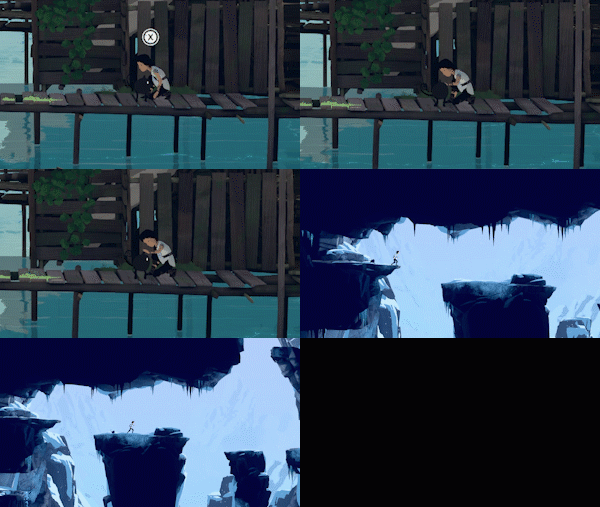
There are also small animation bugs, such as petting Mui in the air instead of on his body. The game also revisits a demo area where sliding caused an unexpected fall, but now that the full game teaches sliding early on, the moment makes more sense.
Environmental interactions are generally well designed. A cable gets stuck on the environment, and if this was intentional, it’s a smart choice — it prevents players from thinking the cable can be used to reach new areas. Mui and Lana also behave more aggressively in this sequel, with Mui directly attacking machines, which didn’t happen in the first game. The game uses impossible-to-defeat enemies to guide the player, a classic and effective design technique.
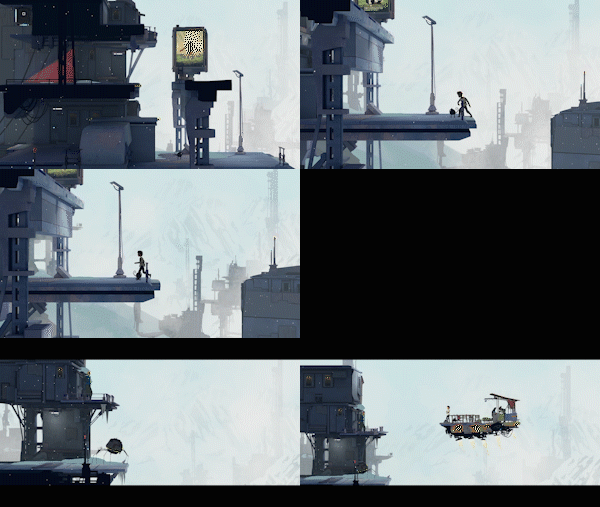
Some areas create mixed expectations. A high point with a small barrier looks like it should block the player, but it doesn’t. A later moment forces the player to think they’re sacrificing a character before a cutscene reveals the rescue — a clever and memorable sequence. You also can’t give commands to Mui while underwater, which makes perfect sense.
Yellow markings are used to indicate walkable areas, similar to the white climbing marks in Uncharted. However, Mui sometimes clips through platforms, which breaks immersion. One puzzle uses animal electricity to open a shell, but it’s strange that the shock doesn’t affect Lana when she’s so close in the water. The swimming exit animation can also bug out.
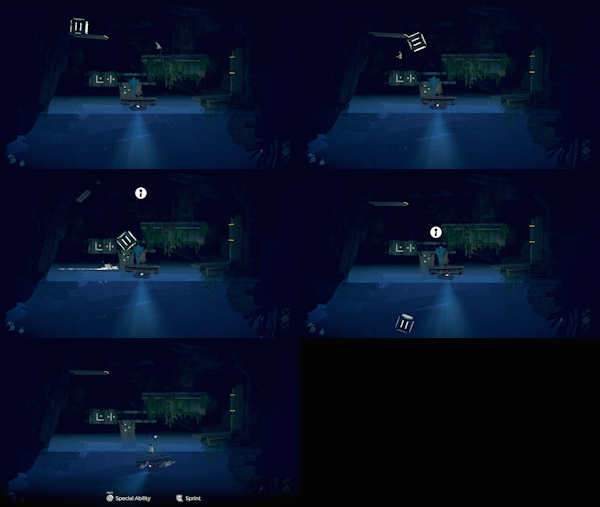
A major bug occurs when a box falls on the player in water, causing the character to fly off-screen. This is important because it can happen naturally depending on where the boat stops. Another puzzle mixes underwater and above-water logic and works well, especially because the symbols don’t need to match the wall layout exactly, avoiding unnecessary rotation mechanics.
Level design remains a strong point. One room is visible early but only becomes accessible after sending Mui through a vent — a great reveal. A movable animal should contain water the first time you interact with it to better communicate its function. Later, mushrooms and wall bumps are used as climbing indicators, and this works much better than grass or vines.
Some main-path areas are too dark or visually unclear, looking more like optional zones than required progression. There are also many empty spaces that feel like they should contain collectibles, which can mislead players. One object is cleverly used for two purposes — watering a flower and reaching a platform.
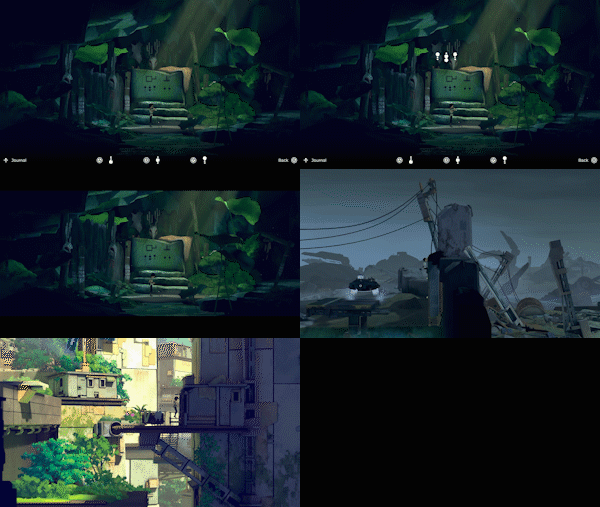
The flute puzzle is charming and creative, but pressing two buttons simultaneously may be difficult for players with accessibility needs. Some climbing sections require jumping from grip to grip, and in these cases, the jump requirement makes perfect sense. However, other areas look jumpable but aren’t, and invisible walls block access to places that appear reachable.
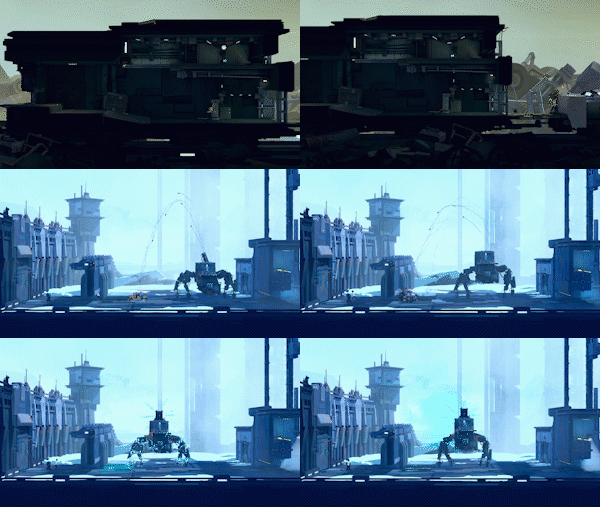
The game also shows good design moments where Mui can return to Lana through small gaps, reinforcing his unique abilities. The final boss fight is fun and surprising, turning Lana and Mui into more direct combatants — something new for the franchise.
Overall, Planet of Lana ll: Children of the Leaf expands the world and mechanics of the first game in meaningful ways. It introduces new ideas, stronger character behavior, and creative puzzles. However, visual clarity issues, small bugs, and inconsistent climb readability appear throughout the experience. Even so, the game remains charming, atmospheric, and full of personality, and the improvements over the demo are clear.
Played on: PC (Steam) — Version: 1.0.14 — Hours played: 9.7h — Played with: Xbox Controller — Date of review: March 11, 2026