

Planet of Lana II – Demo immediately brings back the atmosphere and emotional tone of the first game. The opening minutes feel familiar, almost like returning to a world you already know, with no major surprises at the start — and that’s intentional. The demo focuses on re‑establishing the bond between Lana and Mui while slowly introducing new mechanics and environments.
The settings menu stands out right away, offering clear accessibility options and a clean layout. The demo also makes a good choice by giving access to two different chapters and clearly labeling which one the player is in, helping set expectations for pacing and structure.
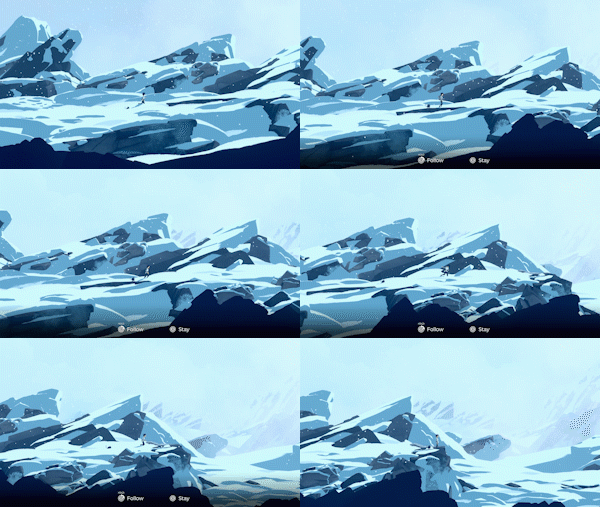
Throughout the demo, several tutorial prompts appear as caption‑style messages near the bottom of the screen. They are useful, but placing the button prompts directly in the gameplay space would make them even clearer. Climbing is one of the new mechanics, and while it’s a welcome addition, its execution feels inconsistent. In some situations, climbing requires repeatedly jumping upward instead of simply pushing the analog stick, which breaks the flow. Later sections allow climbing with the analog stick after the initial jump, which feels much better. A dedicated “start climbing” button could make the system more coherent.
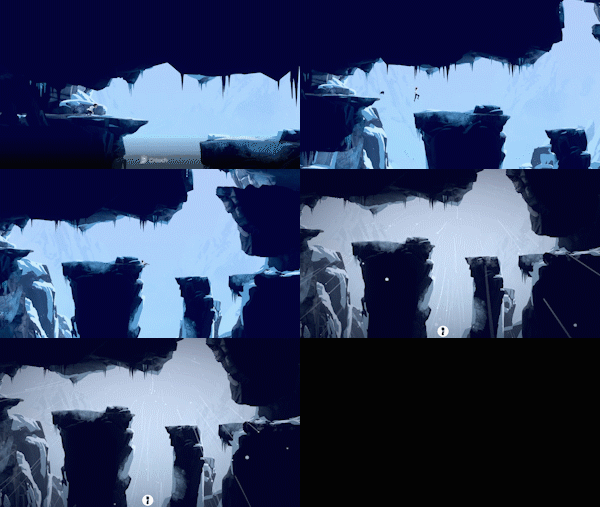
Movement introduces a sliding mechanic triggered by crouching after sprinting, but the game never teaches this before it becomes necessary. This led to unexpected deaths and highlights a gap in the learning curve. A small tutorial moment before the first sliding section would make the mechanic feel fairer.
Despite being a 2D game, snowy environments occasionally make it unclear where the main path is. In one moment, transitioning from climbing inside a cave to suddenly being outside felt abrupt and slightly disorienting. Still, this unpredictability also adds a sense of discovery, even if it breaks spatial continuity.
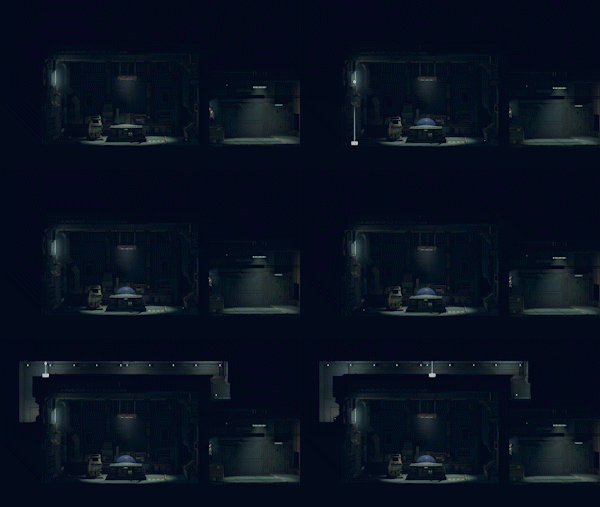
A particularly strong moment of level design appears in one of the moments where it’s necessary to command Mui. At first, the room is surrounded by darkness, giving no indication of additional paths. Only when control shifts to Mui does a hidden tunnel around the room become visible, revealing a vertical route upward. It’s a subtle but effective design choice — a clean example of using visibility, timing, and character abilities to guide the player without explicit instructions.
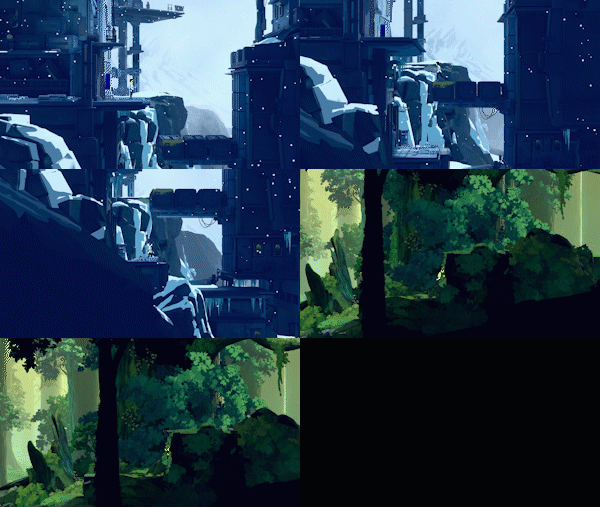
The game uses yellow visual cues to indicate climbable or interactable surfaces, similar to the white markings in Uncharted. It’s a clear and effective design choice, though some areas could benefit from stronger contrast to improve readability.
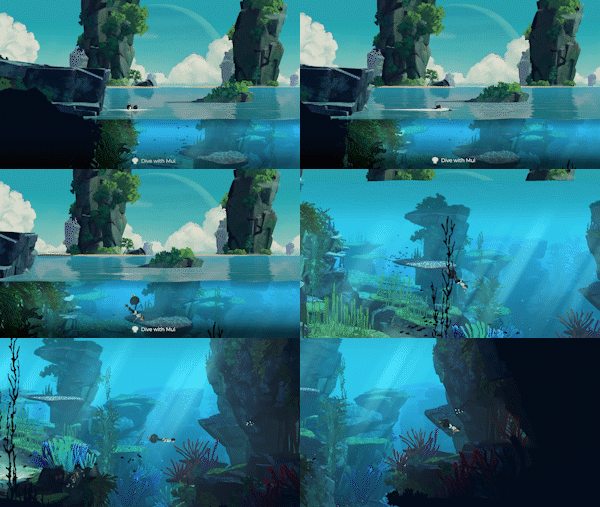
Underwater sections are a major highlight. While the first game had brief water moments, this demo expands the idea significantly. Swimming with Mui underwater feels fresh, atmospheric, and visually striking — a clear evolution from the original game.
Some puzzles introduce new mechanics but lack clarity at first. Controlling the fish took several attempts to understand its purpose, and the expectation that the black cloud would disappear faster made the goal harder to interpret. Another puzzle involving collecting water inside a drone‑like device wasn’t immediately obvious either, a small visual hint showing water inside the device when the special button appears would help guide the player.
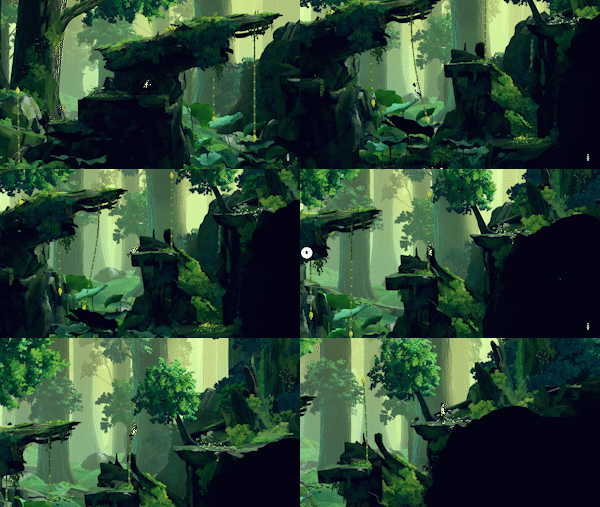
There are also occasional issues with Mui interacting with invisible walls, though these moments are minor. On the other hand, the vine‑like structures that function as ropes feel excellent — fluid, natural, and fun to navigate. They reuse rope physics in a clever way while adding their own identity.
The demo ends with a beautifully emotional moment: Lana and Mui reuniting in a warm embrace. It’s a simple scene, but it reinforces the heart of the series — the relationship between the two characters. The atmosphere suggests that this sequel may explore more human threats rather than robotic ones, hinting at a new faction or group pursuing Mui, which could shift the tone in interesting ways.
Performance throughout the demo was excellent, with smooth gameplay and no noticeable issues, except for a small FPS drop in the final cutscene. Controls with the Xbox controller felt natural and well‑mapped, though exiting boxes instinctively using B/O instead of the intended input took some getting used to.
Overall, Planet of Lana II – Demo shows meaningful evolution from the first game, especially in underwater gameplay and puzzle variety. While some mechanics need clearer onboarding and a few transitions feel abrupt, the demo successfully captures the charm, atmosphere, and emotional core that made the original memorable.
Played on: PC (Steam) — Version: Demo — Hours played: 1.5h — Played with: Xbox Controller — Date of review: February 20, 2026