

I played REANIMAL in local co‑op with my girlfriend, who isn’t a gamer, and that alone shaped the entire experience. The game needed to be readable, intuitive, and fair for two players with different skill levels. Despite several issues, it managed to keep us engaged for the full 8.2 hours. The Collector’s Edition absolutely deserves praise — getting physical PC discs, art, and statues in 2026 is rare and genuinely valuable, and that’s exactly why it was worth it. It stands out not because of in‑game bonuses, but because it offers real, tangible items in a market where that’s almost unheard of.
 The atmosphere stands out immediately. The use of rare, specific voice lines adds a darker and more mysterious tone, something unusual for this style but very effective. On the other hand, the first water area introduces an invisible wall, which breaks immersion and could have been replaced with a more natural environmental limitation. The game also shows a clear warning when players move too far apart — a red message appears and the screen darkens. It’s simple but effective for keeping co‑op players aligned.
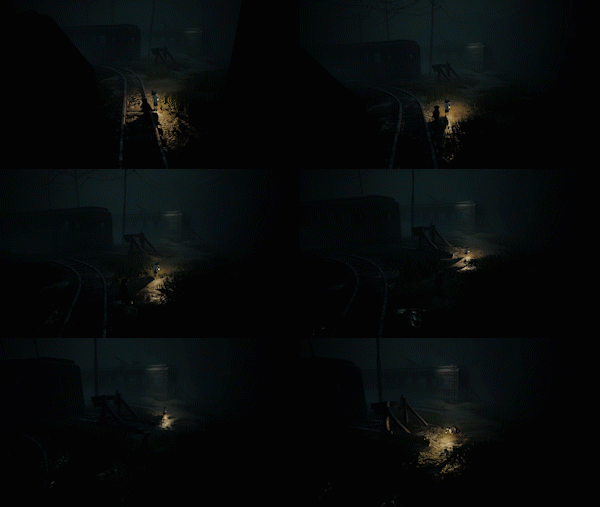 Character swapping is one of the most confusing aspects. At several points, we suddenly switched characters without any warning. Even the character selection menu felt inverted — the left slot was the secondary character and the right slot was the primary one. This created unnecessary confusion, especially for less experienced players. The child character also works as a subtle guide, naturally indicating where the path continues and functioning almost like an indirect tutorial.

In terms of level design, the game shows strong ideas. Areas where you can perform a “boost” are clearly marked with white paint, similar to Uncharted. Red lights and lamps are used consistently as landmarks to guide the player. The camera also hides certain paths intentionally, revealing them only when players move into the correct angle, which creates good moments of discovery. Small details like the character sliding in mud or interactable objects help bring the world to life.
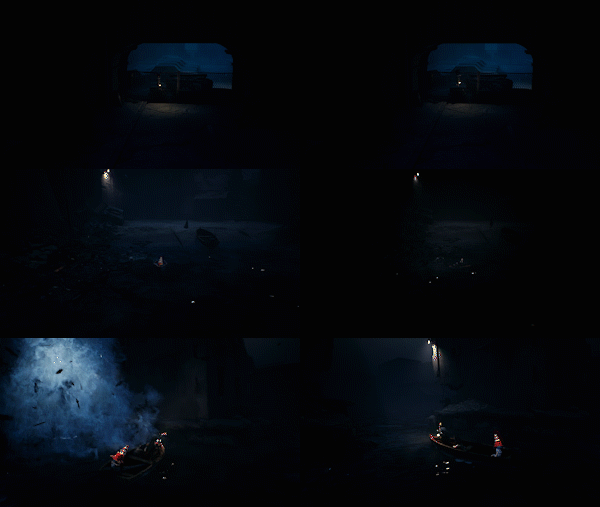
There’s also a net that visually shouldn’t be climbable but traps the character — removing climbability and adding a small aligned collider would solve it cleanly. Swimming is possible but limited, adding tension since staying in the water too long results in death. The new harpoon weapon is a great addition, with strong water effects, explosions, and animations.
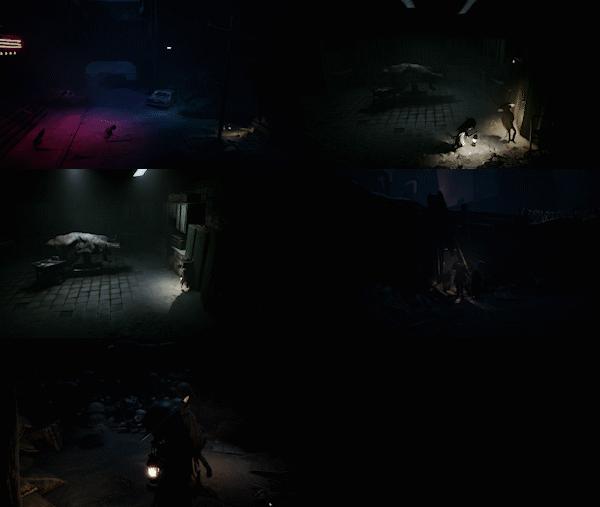
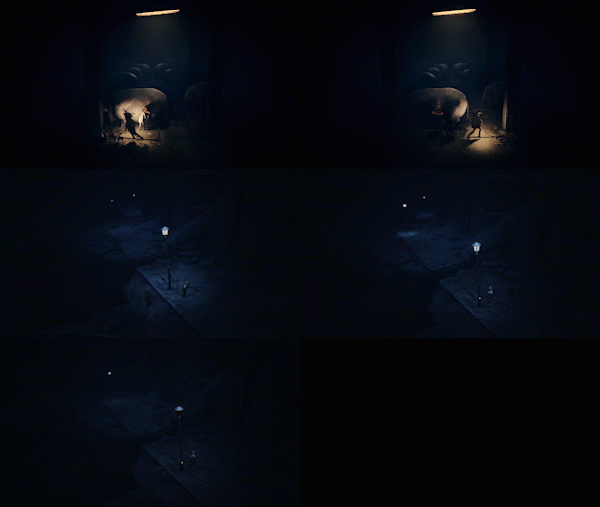 Creatures like minions and rats are used to subtly point toward secrets or alternative paths, which is a smart and contextual way to guide players. However, not everything is polished: we found a secret‑looking area that offered no reward, which breaks the expectation created by the environment. Using the knife on the pig gives no feedback at all — either preventing the interaction or adding a small reaction would avoid confusion. There’s also a rope clipping through electricity poles, a small detail but visually inconsistent.
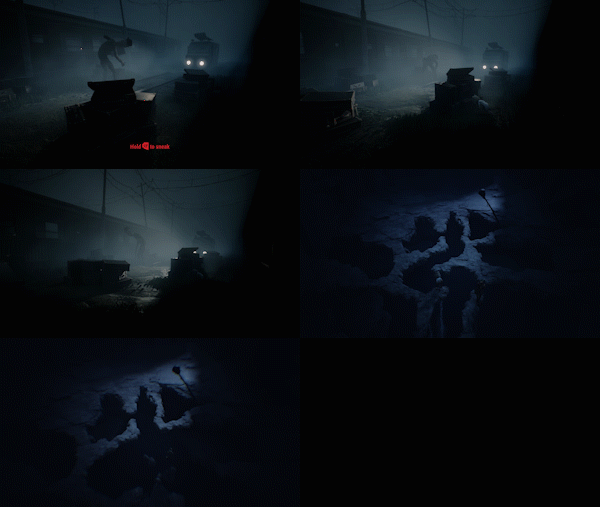 Puzzle clarity varies. The first “boss‑like” encounter was difficult for beginners, and it took several attempts to understand the intended sequence. Another puzzle, where both players couldn’t stand on the same platform, wasn’t immediately obvious. Increasing the distance or adding clearer visual feedback would improve readability.
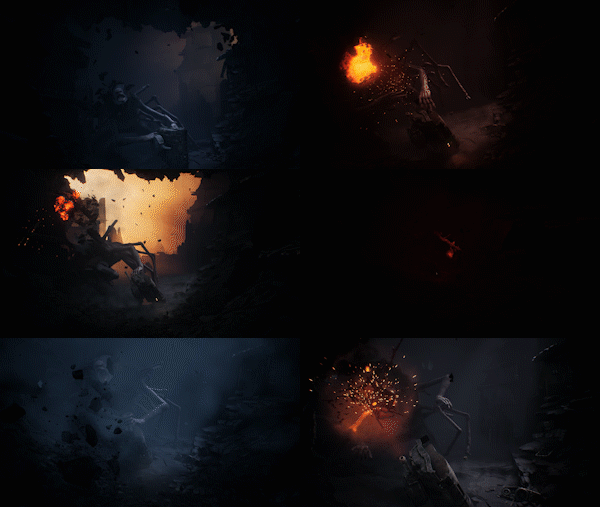
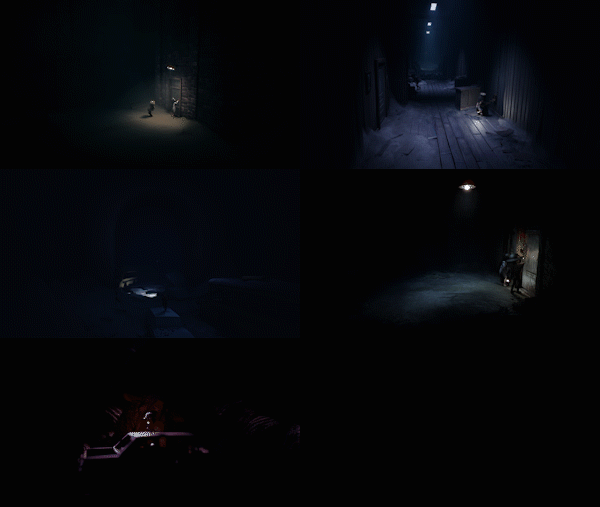 Performance is the weakest part of the game. We encountered multiple issues: a small bug at the start, a camera problem where the screen turned completely black behind a building, and several moments where characters got stuck. Another invisible wall appears later, again in a place where a simple object could have communicated the limitation more naturally. There were also crashes — one when opening a door, a freeze likely caused by loading, and a major crash near the end that broke immersion and even swapped our characters again afterward. A known generator bug forced us to restart the chapter. We also encountered a floating mask during the last encounter, a small but noticeable bug that breaks immersion.
Even with these problems, the game has charm. The world feels reactive, the atmosphere is strong, and the co‑op experience works well. Being able to play online without both players owning the game is a great feature and makes the experience more accessible. Playing in co‑op added both difficulty and fun, and even with the bugs, the game kept us motivated to continue.
Overall, REANIMAL delivers a memorable co‑op experience with strong atmosphere and solid design ideas. It has clear issues, but with patches it could become something even better. As it stands, I still fully recommend it, especially for players who enjoy horror‑style co‑op games.
Played on: PC (Steam) — Version: 354342 — Hours played: 8.2h — Played with: Xbox Controller + PS4 Controller — Date of review: February 25, 2026